Updated Nov 27, 2026, 3:24 AM EST
What Is Forex? How the Currency Market Works for Beginners
Owen Hartley · Forex brokers editor
A plain-English guide to what forex is, how the currency market works, the terms beginners meet first, the real costs and the risks.

What is forex? It is the global market where currencies are exchanged.
Every time a tourist swaps dollars for euros or a company pays a supplier abroad, a currency changes hands. Forex, short for foreign exchange, is the network of banks, brokers and traders that prices all of those swaps. This guide explains the basics in plain language, so you can judge for yourself whether it deserves a place in your learning list.
Forex terms every beginner should know
Forex has its own vocabulary, and most beginner confusion comes from a handful of words. Learn these forex terms first, because what is forex explained in most guides assumes you already know them.
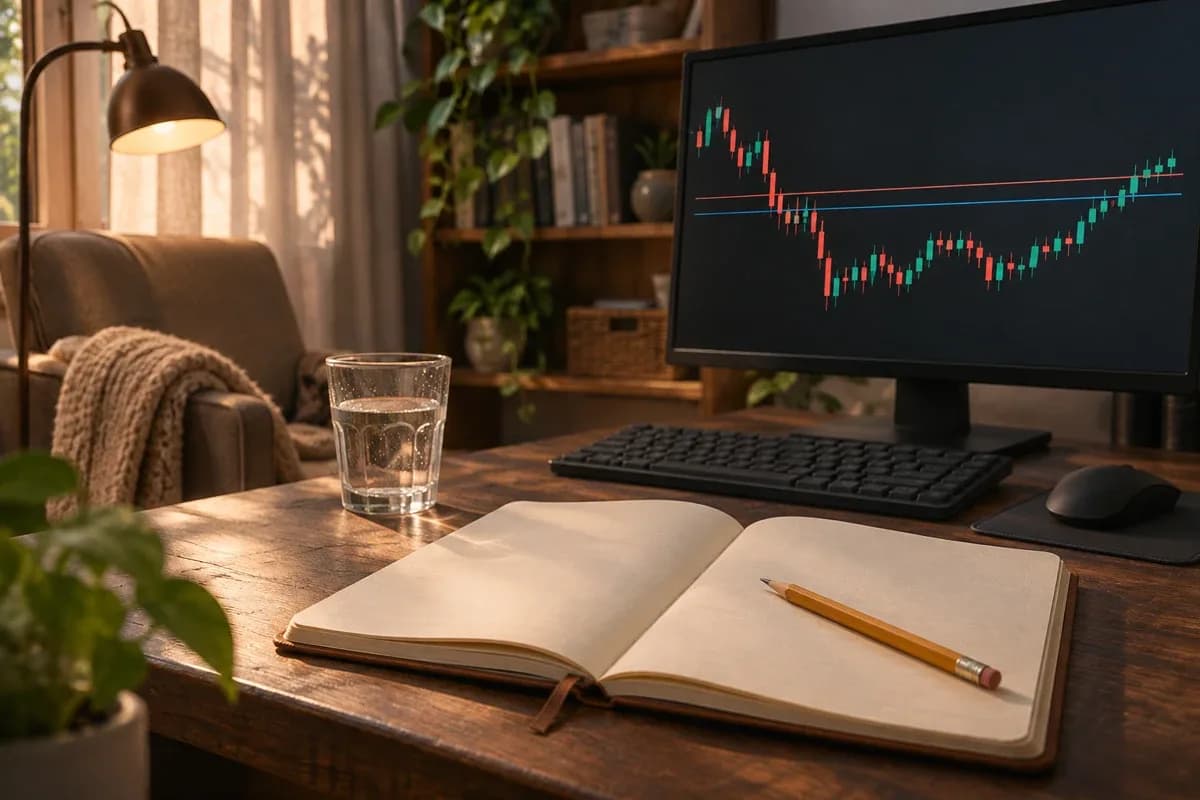
Currency pairs, base and quote
A pair such as EUR/USD lists the base currency first and the quote currency second. If EUR/USD is quoted at 1.0850, one euro costs 1.0850 dollars. That figure is only an illustration of how to read a quote, not a live price. Pairs are grouped into majors, which all include the US dollar, minors, which do not, and exotics, which pair a major with a currency from a smaller economy.
Pips, lots and leverage
A pip is the standard unit of price movement, usually the fourth decimal place for most pairs, so 0.0001. A standard lot is 100,000 units of the base currency, and brokers also offer smaller sizes. Leverage lets you control a larger position with a smaller deposit. It magnifies gains and losses by the same factor, which is why it is the single biggest source of blown accounts.
Spread, commission and swap
The spread is the gap between the buy price and the sell price, and it is the main cost on most accounts. Some accounts charge a separate commission on top of a tighter spread. A swap, or rollover fee, is paid or earned when you hold a position overnight. If you have ever wondered what is forex markup, it is the extra amount a dealer adds to the raw market price, and it is one reason two brokers can quote slightly different spreads on the same pair.
What is forex trade activity like for a retail trader?
A retail trader opens an account, deposits funds and places orders through a platform. The mechanics are simple, and the hard part is the decision making.
Opening a position and closing it
If you expect a currency to rise against another, you buy, which traders call going long. If you expect it to fall, you sell, or go short. The position stays open until you close it or an automatic order closes it for you. Your result is the difference between the entry and exit prices, multiplied by the position size, minus costs.
Orders, stop losses and risk per trade
A market order fills at the current price. A limit order waits for a price you choose. A stop loss closes a losing trade at a level set in advance, so one bad idea does not wipe out the account. Many educators suggest risking only a small fixed share of the account on any single trade, a habit that matters far more than any entry signal.
What moves currency prices
Interest rate decisions, inflation reports, jobs data and central bank speeches are the usual drivers. Politics, trade flows and market mood matter too. This is the idea behind forex fundamental analysis, while chart reading belongs to technical analysis. Once you have a feel for what is forex at the macro level, you will see why most traders blend the two, and neither removes uncertainty. A calendar of scheduled releases helps you avoid opening a position just before a report that could move the market sharply.
What is forex free and what does it really cost?
Search results often mention "forex free" in the form of demo accounts, free courses and bonus offers. Some of these are useful, and some are marketing, so it helps to know the difference.

Demo accounts and free education
A demo account lets you place practice trades with virtual money. It is the safest way to learn a platform, test order types and see how fast prices move. Many brokers offer one for free, and some let you keep it open indefinitely, so there is no deadline to rush into a live account. The limit is psychological: losing virtual money feels nothing like losing your own, so a good demo record does not guarantee calm decisions with real funds.
Where the real costs hide
Even on a "commission-free" account you pay through the spread, and overnight positions add swap charges. Withdrawal fees, inactivity fees and currency conversion on deposits can also apply. Read the broker's fee page before funding anything, and compare costs on the exact pair you plan to trade. A cost that looks tiny per trade becomes large when you trade often, so add up a typical month before you decide.
Choosing a regulated broker
A broker holds your money, so its regulation matters. Anyone still asking what is forex should treat the broker choice as the first real decision. Check which authority supervises it, confirm the license number on the regulator's own website, and read how client funds are held. Segregated client accounts, published financial statements and a clear complaints process are all positive signs, but none of them removes market risk. A regulated broker protects you from some kinds of misconduct, not from your own losing trades. Be careful with offers of very high leverage or promises of steady profit, since no legitimate firm can guarantee a result.
Mistakes beginners make after learning what is forex
Knowing what is forex is only the first step, and the first few months are where most of the damage is done. These are the patterns that show up again and again in beginner accounts.
Using too much leverage too early
A high leverage setting feels like extra buying power, so new traders open positions far larger than their account can absorb. A move of a few pips against the position can then trigger a margin call. Keeping position size small relative to the account gives you room to be wrong many times without ending the experiment.
Trading without a written plan
A plan states which pairs you trade, when you trade them, what makes you enter, where you exit if you are wrong, and how much you risk. Without it, each trade becomes an emotional reaction to the last one. Writing the plan down, then following it on a demo account, is the cheapest way to find its weak spots.
Chasing signals and unverified promises
Social media is full of signal groups, screenshots of winning trades and offers of managed accounts. Screenshots show wins and hide losses, and nobody can verify them. Treat any pitch that stresses easy money as a warning sign, and build your own understanding of what is forex before paying anyone for advice.
Frequently asked questions about forex
These are the questions beginners ask most often.
Is forex trading risky?
Yes. Leveraged trading can lose money quickly, and a large share of retail accounts lose money according to the risk warnings that brokers must publish. Never trade with money you cannot afford to lose, and treat anything you read here as education rather than advice. Before you ever fund an account, ask yourself what would happen to your finances if the whole deposit disappeared. If the answer is uncomfortable, reduce the amount.
How much money do I need to start?
Many brokers allow small deposits, but a small account limits how much risk you can spread sensibly. The better question is how much loss you can accept without stress, because that sets your position size.
Can I learn forex without risking real money?
Yes. Start with a demo account, a trading journal and a written plan. Move to a small live account only after you can follow your own rules for several weeks.
What is forex trading compared with stocks?
Stocks represent ownership of a company, while a forex trade is an exchange of one currency for another. The forex market is open around the clock on weekdays and runs through banks and brokers rather than a single exchange. Stocks tend to be bought and held, while forex positions are usually shorter and often leveraged.
What is forex used for besides speculation?
Companies use the market to pay foreign suppliers and to hedge the risk of exchange rates moving against them. Travelers, investors and central banks use it too. Speculators are only one group among many.
Forex rewards patience and punishes shortcuts.
What is forex and how does the market work?
- What is forex in simple terms?
- Forex is the buying of one currency while selling another. You never buy "the euro" on its own. You buy euros and pay for them with dollars, so every trade is a bet on how two currencies move against each other. If the euro gains against the dollar, a buyer of EUR/USD profits, and if it falls, that buyer loses. That pairing is the heart of what forex is, and it explains why quotes always show two currency codes.
- What is the forex market and who trades in it?
- The forex market is a decentralized, over-the-counter market. Large banks do most of the volume, followed by hedge funds, asset managers, corporations and central banks. Retail traders are a small slice. Because there is no central exchange, a retail trader's quote depends on the broker, which is why two platforms can show slightly different prices at the same moment. The Bank for International Settlements reported average daily turnover of about $9.6 trillion in April 2025, which is why the market is described as the largest financial market in the world by volume.
- How does forex work across the trading week?
- Trading follows the sun. Sydney, Tokyo, London and New York open in turn, so prices keep moving from Monday morning in Asia until Friday evening in New York. Activity is heaviest when two big sessions overlap, usually London and New York, and thinner during the quiet hours between sessions. Weekends are closed, which is why gaps can appear when the market reopens on Monday. Knowing the schedule helps you decide when to watch the screen and when to step away, since many beginners lose money by trading during thin, erratic hours simply because the market happens to be open.
Some links on this site are affiliate or introducing-broker links: we may earn a commission if you open an account, at no extra cost to you. It never changes a score, a rating or a position in a list.